
Gay Areas in Connecticut: Neighborhood-by-Neighborhood Guide
06/10/26
A real, specific guide to the most LGBTQ+ welcoming neighborhoods in Connecticut — from West Hartford's Blue Back Square to New Haven's Wooster Square and beyond.
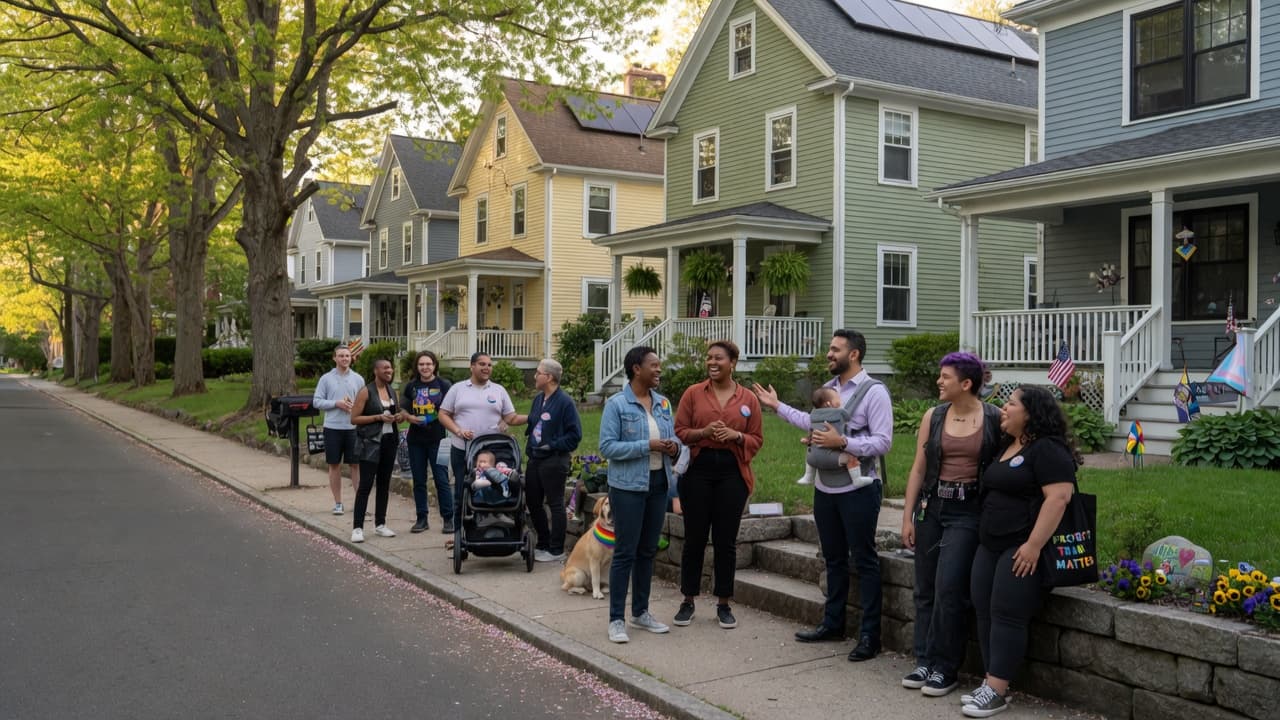
Most LGBTQ+ Welcoming Neighborhoods in Connecticut
A real, specific guide to the most LGBTQ+ welcoming neighborhoods in Connecticut — from West Hartford’s Blue Back Square to New Haven’s Wooster Square and beyond.
Connecticut doesn’t have one gay neighborhood. It has many, each with a distinct character, price point, and community energy.
This guide breaks down the most welcoming areas neighborhood by neighborhood, with honest notes on what makes each one work and where the tradeoffs are.
This isn’t based on assumptions or outdated reputation. This is based on direct client conversations, market data, and the on-the-ground knowledge of gay realtors and LGBT real estate agents who live and work in these communities.
West Hartford: Blue Back Square
Connecticut’s gold standard for LGBTQ+ living.
Blue Back Square is the closest thing the state has to a traditional gayborhood — pride flags year-round, queer-owned restaurants and coffee shops, and a community where LGBTQ+ families are embedded throughout the neighborhood fabric.
Condos and townhomes in the immediate area run $320,000–$520,000.
For the full picture, read our dedicated guide on why West Hartford is one of Connecticut’s most LGBTQ+-friendly towns.
New Haven: Wooster Square, East Rock & Westville
New Haven’s LGBTQ+ scene is distributed across several distinct neighborhoods:
- Wooster Square — the historic queer hub with grassroots community presence and famous pizza
- East Rock — quieter, residential, favored by Yale faculty and queer families
- Westville — artsy village feel with LGBTQ+-owned businesses on Whalley Ave
For the full neighborhood-by-neighborhood breakdown, including prices, see our dedicated guide to the best LGBTQ neighborhoods in New Haven.
Hartford: Parkville
Parkville is Hartford’s most interesting neighborhood story.
A former industrial area undergoing genuine creative revitalization, Parkville has strong LGBTQ+ community roots. Several queer-owned businesses have anchored the neighborhood’s transformation.
Home prices are exceptional value for what you get: single-family homes in Parkville are typically available in the $150,000–$280,000 range, making it the most affordable LGBTQ+-welcoming neighborhood in the state.
The tradeoff is the urban realities of Hartford proper, which is still navigating significant fiscal and infrastructure challenges.
Buyers who see the neighborhood’s trajectory and can tolerate the imperfections of a city in transition are finding real value here.
Middletown: Downtown and the Wesleyan Corridor
Middletown doesn’t have a single named “gay neighborhood.”
Instead, the entire downtown and the corridor near Wesleyan University function as an LGBTQ+-affirming zone.
The university’s influence is profound and pervasive. It’s the kind of town where queer visibility is normalized rather than concentrated, which some buyers find preferable to a more explicitly demarcated “gayborhood.”
Litchfield County: The Rural Alternative
The Litchfield County market, particularly Washington, Warren, and the Lake Waramaug area, has a long history as a retreat for LGBTQ+ professionals and couples from NYC and Boston.
It’s not a “neighborhood” in the urban sense, but rather a community of second-home owners and year-round residents who have chosen privacy, natural beauty, and space.
The queer presence here is established but quieter — known within the community, invisible from the outside.
How a Gay Realtor or LGBT Real Estate Agent Unlocks These Neighborhoods
Lists and rankings give you a starting point.
A gay realtor or LGBT real estate agent gives you the layer underneath:
- The specific block where the LGBTQ+ community is most active
- The building where the residents’ association is explicitly affirming
- The street that’s seen five queer families move in over the past two years
That intelligence doesn’t appear in any public database.
Our gay real estate agents live in these communities. When you start a conversation with our team, you’re talking to an LGBT realtor who can tell you:
- Which block has the best energy
- Which condo building has an active LGBTQ+ residents’ group
- Which school principal is an exceptional ally
That’s the layer of information that neighborhood guides don’t provide — and it’s why working with the right gay real estate agent makes every other part of your search more efficient.
For buyers still comparing markets, our full guide to the best places to live in Connecticut for LGBTQ+ people gives you the broad view before you zoom in.